

How Pet Dental Care Needs Change at Every Life Stage
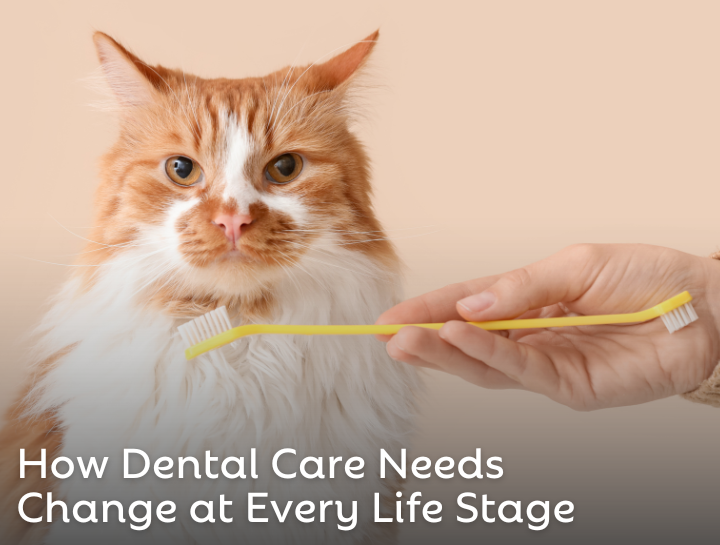
Did you know February is National Pet Dental Health Month? Just like humans, a cat’s mouth changes significantly as they age. Whether you have a new kitten or a senior cat, here is how to manage their dental journey. And remember, always be careful when evaluating your cat’s mouth, because an animal in pain may bite.
The Early Months: Foundations (0–12 Months)
The milestones: Kittens are born toothless, but by 6–8 weeks, they have a full set of baby teeth. Around 6 months, those should fall out to make room for adult teeth. This is the golden time to get your cat used to their mouths being touched.
What to do: Gently lift their lips and touch their gums daily. Introduce a pet-safe toothbrush and paste (never human toothpaste!) so they view "brushing" as a treat rather than a chore.
-
Click here to watch a video from the AVMA on how to properly provide home dental care for your cat.
The Prime Years: Prevention (1–7 Years)
The milestones: By age 3, 70% of cats show early signs of periodontal disease. This is when plaque hardens into tartar (calculus), which cannot be brushed away. Cats in this stage are also susceptible to gingivitis and early-stage resorptive lesions.
What to do: Daily brushing remains the gold standard. If your cat is not used to regular brushing, start slowly to help them gain more comfort. For example, start by letting them lick toothpaste off your finger before transitioning to a finger brush or toothbrush. Additionally, prioritize annual exams so we can proactively screen your cat for gingivitis and help you navigate the many dental products on the market, ensuring the treats, diets, or tools you choose are effective for your cat's oral health.
The Senior Years: Maintenance & Comfort (7+ Years)
The milestones: Senior cats are highly prone to fractured teeth, tooth resorption (where the body reabsorbs the tooth), and advanced gum disease that can affect the heart and kidneys. Cats are masters at hiding dental pain, so be proactive and schedule an appointment with us if you notice these signs:
-
Bad breath
-
Red or swollen gums (healthy gums are pink)
-
Broken or loose teeth
-
Visible tartar buildup
-
Reduced appetite or refusal to eat
-
Pain in or around the mouth
-
Blood in their water bowl after drinking
What to do: Watch for the points above and for silent signs of pain, like dropping food, chewing on one side, or suddenly preferring wet food over dry. Professional dental cleanings under anesthesia become crucial here to deep-clean under your pet’s gumline.
At Cat Clinic North, we understand the importance of taking care of your cat’s teeth. That’s why we provide a range of services to keep their teeth and gums healthy throughout each life stage. Call us at (616) 364-1211 to schedule your cat’s next dental exam, cleaning, or treatment.